In North Queensland, stinger season runs from November to May, covering the hot and humid summer months. During this period, the ocean becomes home to some of the world’s most dangerous jellyfish.
The Two Main Threats
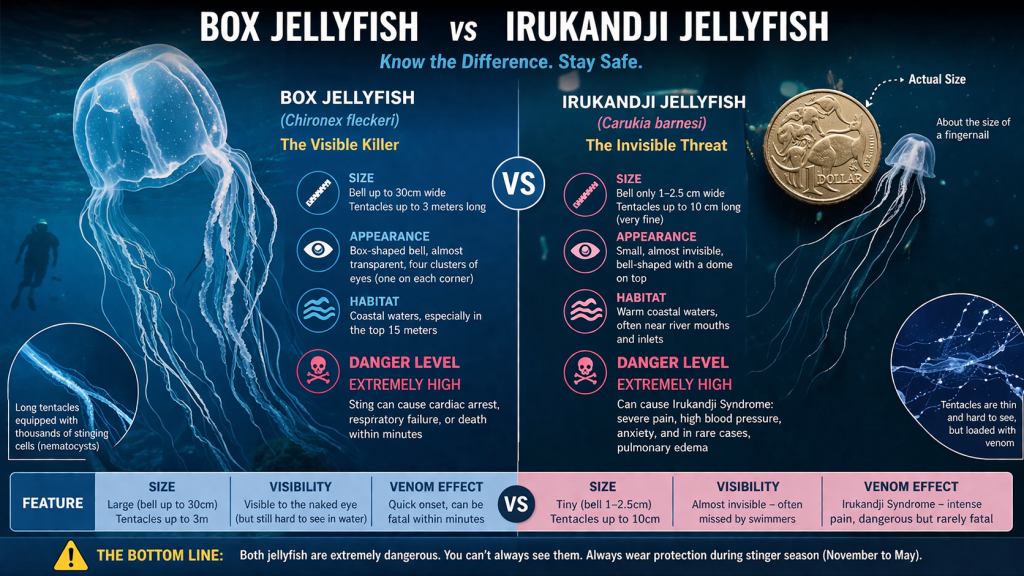
Box Jellyfish (Chironex fleckeri)
- Large but nearly transparent
- Long tentacles reaching several meters
- Extremely venomous
👉 A severe sting can cause cardiac arrest within minutes
Irukandji Jellyfish
- Tiny (about fingernail size)
- Nearly invisible in water
- Causes Irukandji syndrome (extreme pain, high blood pressure, panic)
👉 Often more dangerous because swimmers don’t see it
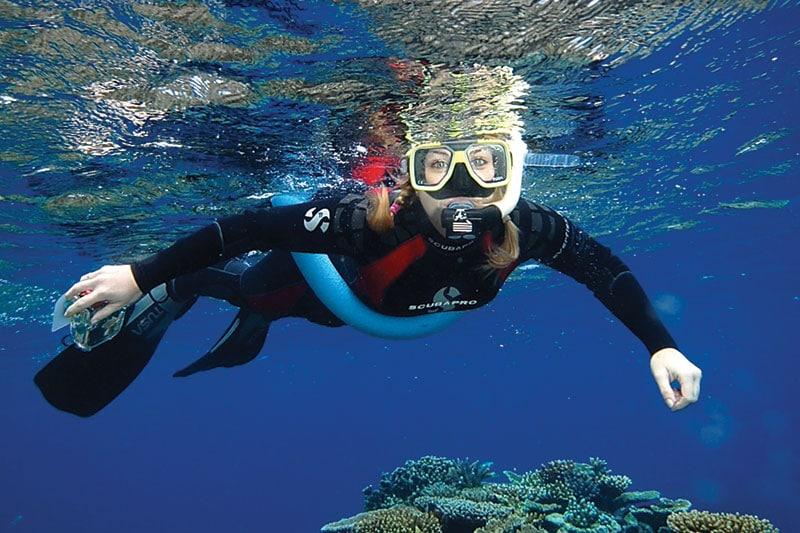
Why a Stinger Suit is Non-Negotiable
A stinger suit is not optional—it is essential.
✔ Protects against jellyfish stings (physical barrier)
✔ Provides SPF 50+ sun protection
✔ Lightweight and comfortable for snorkeling
👉 Good news:
Most reef tours from Cairns or Port Douglas provide them for free or rent, so you don’t need to buy one.
Safe Areas
1. Patrolled Beaches with Stinger Nets
Look for:
- Stinger nets (mesh enclosures in water)
- Red & yellow flags (lifeguard zones)
👉 Only swim inside these zones
These areas are actively monitored and significantly reduce the risk of jellyfish encounters.
2. Freshwater Swimming Holes (Best Alternative)
Recommended spots:
- Mossman Gorge
- Babinda Boulders
👉 Why safer?
- No saltwater → no marine jellyfish
- Cooler, scenic rainforest environment
👉 Many experienced travelers prefer these over the ocean during stinger season
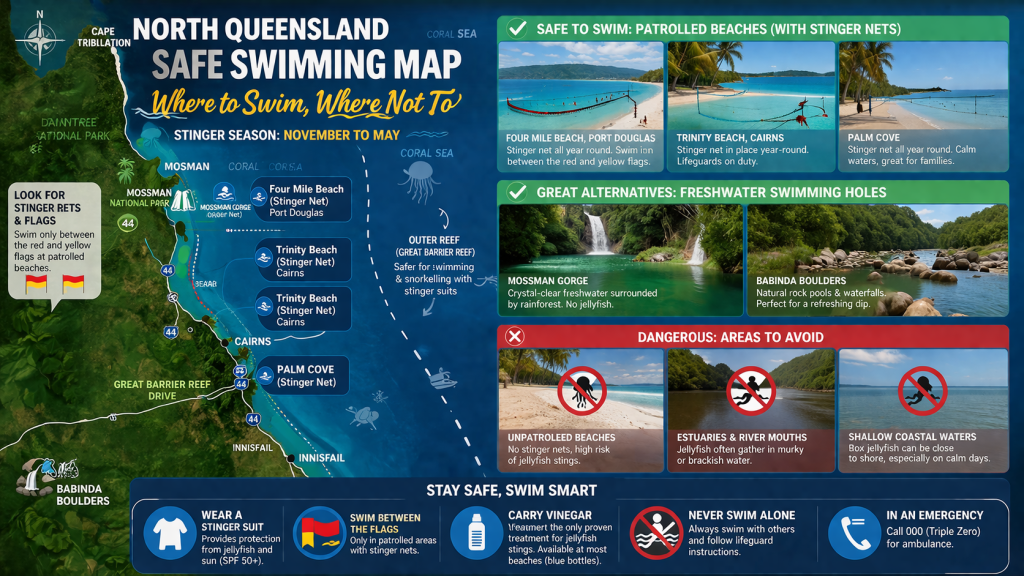
3. Outer Great Barrier Reef
- Jellyfish are less concentrated offshore
- Strong currents reduce their presence
Dangerous Areas (Avoid Completely)
⚠️ BUT:You must STILL wear a stinger suit
- Unpatrolled beaches
- Murky or shallow coastal waters
- Estuaries and river mouths
👉 These are high-risk zones for box jellyfish
First Aid: The Only Method That Works
Dangerous Myth: Urine Does NOT Work
Forget what you’ve seen in movies.
👉 Urinating on a jellyfish sting can actually make it worse, triggering more venom release.
The ONLY Proven First Aid: Vinegar
In Australia, you’ll often see vinegar bottles mounted on beach poles.
What to do:
- Pour vinegar over the sting area immediately
- This neutralizes unfired stinging cells
- Seek medical help ASAP
What NOT to do:
- Do NOT rub the area
- Do NOT use fresh water
- Do NOT apply pressure
Why Vinegar Works
Vinegar stops the microscopic harpoons (nematocysts) from firing more venom.
👉 It does NOT cure the sting
👉 But it prevents it from getting worse

Special Tips for Road Trip Travelers
If you’re planning a coastal journey, safety becomes even more important.
👉 You can read the full route guide here:
👉 Queensland East Coast Road Trip: The Ultimate Campervan Itinerary
✔ Smart Travel Tips:
- Keep vinegar in your campervan
- Choose holiday parks with pools
- Avoid random beach stops in stinger season
👉 Many travelers doing East Coast road trips combine:
✔ Safe reef tours
✔ Freshwater swimming
✔ Campervan flexibility
Stinger season in Queensland shouldn’t stop your trip—it just means you need to travel smarter.
✔ Wear protection
✔ Choose safe swimming locations
✔ Know proper first aid
👉 With the right knowledge, you can still enjoy one of the most beautiful coastlines in the world—safely.